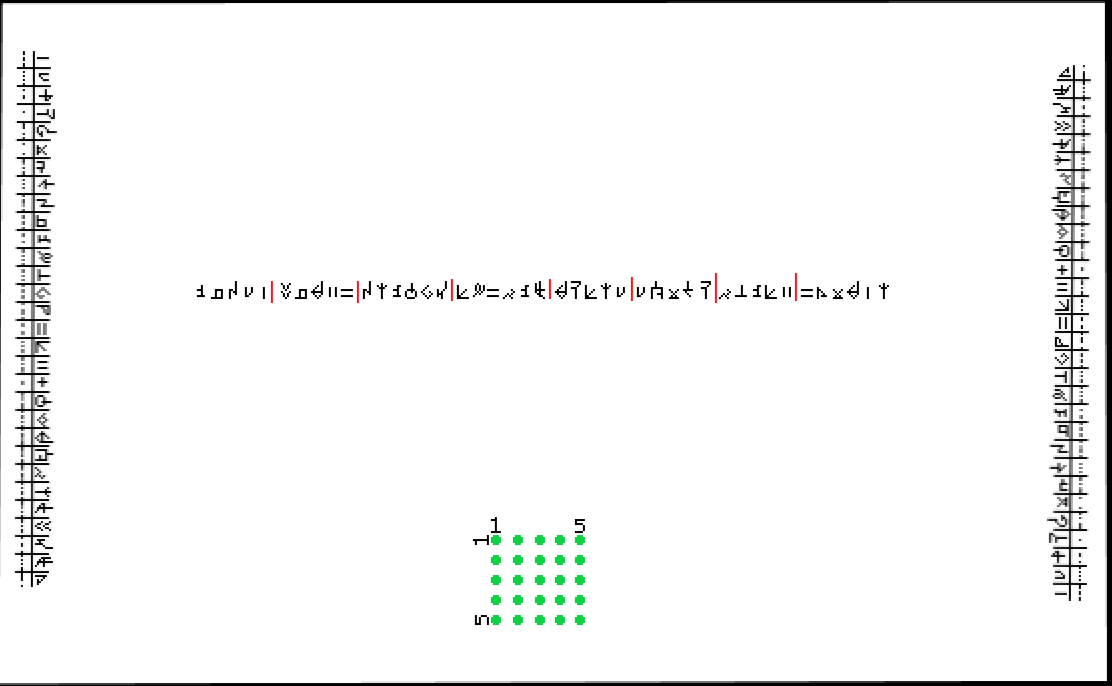
|6.5| (Six-Five)
|4.5|2.3|1.5| |2.1|2.4|4.3|4.4|4.5|
|4.5|2.3|1.5|
|5.3|3.5|4.3|4.4|4.5|
|4.5|2.3|1.5|
|3.2|1.5|1.1|4.4|4.5|
|4.5|2.3|1.5|
|1.2|1.5|1.1|4.4|4.5|
|4.5|2.3|1.5|
|2.2|4.3|2.4|1.4|4.4|
|4.5|2.3|1.5|
|3.2|2.4|3.4|1.5|4.4|
|4.4|2.4|5.5|
|2.1|2.4|5.2|1.5|

|4.5|2.3|1.5| |2.1|2.4|4.3|4.4|4.5|
|4.5|2.3|1.5|
|5.3|3.5|4.3|4.4|4.5|
|4.5|2.3|1.5|
|3.2|1.5|1.1|4.4|4.5|
|4.5|2.3|1.5|
|1.2|1.5|1.1|4.4|4.5|
|4.5|2.3|1.5|
|2.2|4.3|2.4|1.4|4.4|
|4.5|2.3|1.5|
|3.2|2.4|3.4|1.5|4.4|
|4.4|2.4|5.5|
|2.1|2.4|5.2|1.5|
Origin
Six Five was my first attempt at an encryption system. It was created at a family dinner when I was about ten years old, when suddenly I had the idea of connecting the alphabet to counting on my fingers. With some quick experimentation, I found this was a cool way to hide words in a unique way while also being able to decipher it anywhere. I presented a string of numbers to my dad and brother who attempted to figure out what I was encoding, and it was when they struggled to figure it out that my love for encryption really started.
When I went to school, I shared it with my friends, and we sent notes to each other on the playground, practicing writing and deciphering the code. This also coincided in the time where I started up an informal "club." As part of our founding rules, I had one of the members write a whole code of conduct on a sheet of paper in this encrypted system which the top members all signed. I saw my encryption system having real use in the world and it was fantastic.
This all took place in late elementary school, and from that point in time I had somewhat forgotten about it, until a couple years later in eighth grade. With a much larger friend group, I decided to stress test the system with the smartest people I knew. The challenge? Three puzzles of increasing difficulty which all used Six Five. The reward? Fifty dollars to the first person to solve them. Luckily I never needed to pay the person who solved them all because everyone either forgot or gave up! But it did lead me to develop a more complicated version of Six Five that I believe is far more interesting than the initial version.
Loom Glyph
Procedure
As Six Five essentially is the Polybius Square, this description will go over both the original way to write with fingers and the simpler grid version.
First, fingers. To write Six Five using fingers start by hovering your hand over a flat surface like a table or leg. Then, begin going through the alphabet and tapping the surface for every letter starting at the thumb and ending at the pinky. When you reach the pinky, start tapping again from the thumb. When you reach your desired letter, stop tapping and see which finger it landed on (Thumb = 1, Pinky = 5). This is the second digit of your symbol. The amount of resets you had is the first digit (the first cycle is 1). Using this process, you can write or decipher any Six Five wherever you are. The title picture on this page shows which letters fall on each finger, with the cycles increasing as the letters are closer to the palm.
Now, the grid. To write Six Five using a grid start by taking any writing utensil and creating a five by five grid with an extra square at the bottom left of the grid. Then starting at the top left corner, label the rows and columns one through five (six for the rows). Then fill the grid left to right, top to bottom with the letters of the alphabet with "Z" in the special box on the sixth row. Then just find the letter and find its grid coordinate with the vertical axis being written first.
Try deciphering this string using both methods: |2.2|3.5|3.5|1.4| |2.5|3.5|1.2|
Given some time, you will have these positions memorized and can write Six Five without any tools at all. This makes you more conscious about the positions of the letters in the alphabet, as well, which can be helpful in certain situations.


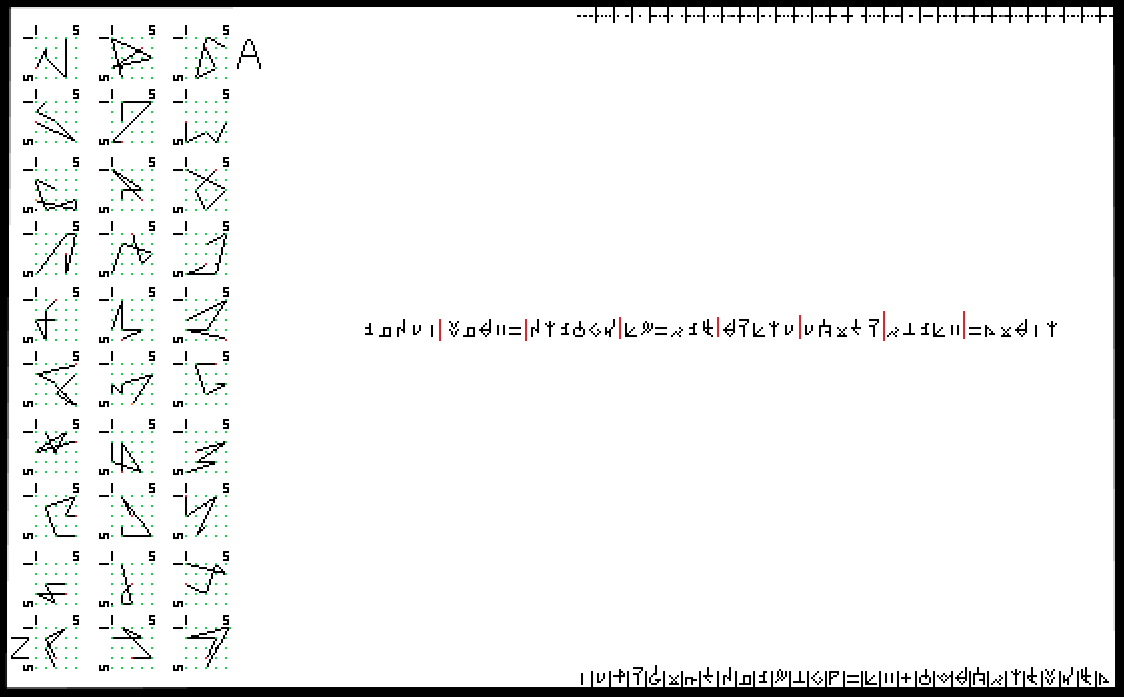
Six Five is a great system by itself because of its simplicity, but I wanted something more. Loom glyph uses the grid system to its full extent by using the paths of lines to describe words. Using the five by five grid (“Z” is one of the least used letters in the alphabet and thus is a grey area in this system), words can be hidden by creating paths between the points used in the words. By marking the starting point and following the path, the coordinates the line hits reveals a hidden message that is not originally clear by just looking at the symbol.
This simple modification to Six Five made it so much better and harder to decipher, as linking the grid to letters and linking the path to being a specific word are two big jumps that need to be steadily practiced to build confidence and accuracy.
This system came out of the competition (or "stress test") in middle school, and was fully functional in eighth grade. The puzzles that were given are provided below: